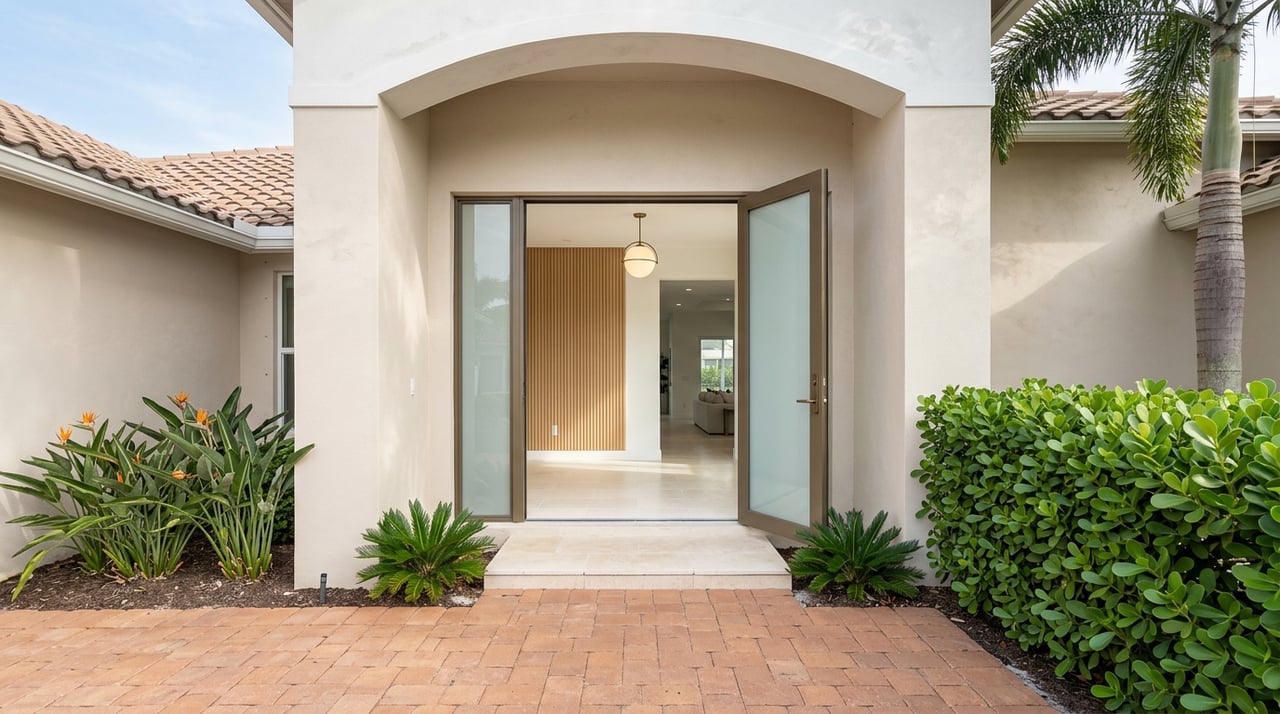
Port St. Lucie New Construction vs Resale Homes
June 11, 2026
June 11, 2026
Choosing between a brand-new home and a resale property in Port St. Lucie is not always as simple as picking “modern” or “established.” In this market, your decision often comes down to how you want to live, where you want to be, and how much flexibility you want in your budget and timeline. If you are weighing both options, this guide will help you compare the real tradeoffs in Port St. Lucie so you can move forward with more clarity and confidence. Let’s dive in.
Port St. Lucie has grown dramatically over the years, from fewer than 300 residents in 1961 to more than 260,000 in 2025. City planning documents show that much of the future housing growth is expected in western areas tied to annexation and large master-planned communities west of I-95.
That growth pattern shapes the way many buyers shop today. In Port St. Lucie, comparing new construction versus resale often means comparing newer west-side communities like Tradition, Riverland, and other New Community Development District areas with more established neighborhoods across the city.
Price is also part of the equation. Recent market data places Port St. Lucie home values and prices broadly in the high-$300,000s to mid-$400,000s, depending on the source and metric used, which means both new and resale homes can overlap in price while offering very different lifestyles and features.
New construction is a major part of Port St. Lucie’s housing story. Some of the city’s largest concentrations of new homes are in master-planned communities such as Tradition, Riverland, and PGA Village Verano.
These communities often attract buyers who want a more current layout, newer systems, and access to planned amenities. Tradition reports more than 500 acres of lakes and over 300 acres of parks and nature preserves, while Riverland is described as a 4,000-acre community with more than 100,000 square feet of amenities and traffic-free pathways.
PGA Village Verano offers homes from about 1,500 to more than 3,000 square feet, along with a 40,000-square-foot amenity campus. Buyers can often choose between move-in-ready homes and homes that are still in the build process.
One of the biggest advantages of new construction is predictability. You are typically getting a home with new roofing, HVAC, plumbing, appliances, and finishes, which can reduce the chance of near-term repair costs.
Customization can also be appealing. In Port St. Lucie, that usually means a guided design process rather than a fully custom build, with choices that may include floorplans, exterior styles, kitchen layouts, lighting, tile, and quartz finishes depending on the builder and community.
Energy performance may be another plus. Mattamy reports that homes in Kenley at Tradition have an average HERS score of 59, compared with a typical existing home score of 130, which suggests some new homes may use less energy.
Warranty coverage is also worth noting. Under Florida Statute 553.837, builders must warrant newly constructed homes for one year for covered defects that materially violate the Florida Building Code, although exclusions can apply for things like normal wear and tear, settling, and acts of God.
The biggest misconception about new construction is that all new homes are priced the same or delivered on the same timeline. In reality, pricing can vary significantly by builder, location, and home type.
For example, Mattamy’s Kenley in Tradition lists quick move-in homes ready now at $404,900, while GL Homes shows Riverland pricing ranging from the mid-$300,000s to the $900,000s depending on collection and size. That range matters if you are trying to compare “new construction” as one category.
You should also remember that many new-home communities come with a more structured environment. That can be a positive if you want planned amenities and a cohesive neighborhood feel, but it may not be the right fit if your top priorities are lot variety, mature landscaping, or a more established setting.
Resale homes give you access to a wider mix of neighborhoods, home ages, lot sizes, and price points. That variety is one reason many buyers still prefer resale, especially if they want to compare multiple parts of Port St. Lucie instead of focusing on one newer master-planned area.
Neighborhood-level pricing shows how broad that range can be. Realtor.com reports median listing prices around $449,000 in Tradition, about $349,250 in St. Lucie West, around $316,000 in Sandhill Crossing, and about $521,950 in Southbend Lakes.
That spread makes resale appealing for buyers who want more options. Depending on the area, you may find a lower entry price than some new-home communities, or you may find an established higher-priced neighborhood with a different setting and character.
A resale home lets you see exactly what you are buying before closing. You can walk the actual property, assess the layout in person, and evaluate the yard, street, and surrounding homes as they exist today.
Location choice is another strong advantage. Resale inventory can open the door to established neighborhoods throughout Port St. Lucie, not just the newest growth corridors west of I-95.
There may also be more room for negotiation depending on the property and market conditions. Realtor.com reports homes in Port St. Lucie averaging 63 days on market and selling about 2.09% below asking on average, which can give buyers time and leverage to compare options carefully.
The inspection process matters more with resale because the home has already been lived in and its systems have aged over time. If your contract is contingent on a satisfactory inspection, the buyer can cancel without penalty if the inspection is unsatisfactory.
Warranty coverage is also different. A home warranty on an existing home is generally a service contract purchased at extra cost, and it usually covers selected appliances or systems rather than the builder-level coverage that often comes with new construction.
You should also avoid assuming that an older neighborhood automatically means fewer shared costs or obligations. In Port St. Lucie, some established communities still have significant community-level service structures, such as the St. Lucie West Services District and Tradition’s community association.
In many markets, the new-versus-resale decision is mainly about the age of the house. In Port St. Lucie, it is also about geography.
City planning points to western growth areas such as Tradition, Western Grove, Southern Grove, and Riverland as major drivers of future development. That means when you choose new construction, you are often also choosing a part of the city shaped by newer infrastructure, master planning, and continued expansion.
When you choose resale, you may have a broader map to work with. You can compare neighborhoods with different price points, lot sizes, and development patterns, including areas that feel more built out and established.
This is why the better question is often not just “new or resale?” but “which part of Port St. Lucie best fits how I want to live?” Once you answer that, the housing type often becomes easier to evaluate.
No matter which path you choose, climate risk should be part of your decision. The City of Port St. Lucie states that flooding can happen anywhere, and standard homeowner’s and renter’s insurance do not cover flood damage.
The city advises buyers to check FEMA and city flood maps. It also notes repetitive-loss areas along the St. Lucie River and west of I-95 from roughly Becker Road to Tradition.
Storm timing matters too. NOAA states that hurricane season runs from June 1 through November 30, so if you are comparing homes in Port St. Lucie, it is smart to look closely at flood zone information, insurance implications, and the property’s overall condition regardless of whether the home is new or resale.
If you are a first-time buyer, resale may make more sense if your main priority is a lower entry price, an established neighborhood, or the ability to inspect a fully built home before closing. New construction may be a better fit if you value warranty protection, lower near-term repair exposure, and a more predictable finish package.
If you are a move-up buyer, new construction may stand out for layout flexibility, energy efficiency, and amenity-rich communities. Resale may stand out if you want immediate occupancy, more location variety, or the chance to negotiate in an established area.
The good news is that Port St. Lucie’s current market gives you room to compare. With a range of price points, days on market that allow for thoughtful decision-making, and distinct neighborhood options across the city, you do not have to rush into one path just because it is new or familiar.
When you are deciding between new construction and resale in Port St. Lucie, focus on the factors that affect your daily life and long-term comfort most:
A clear side-by-side comparison can save you time and help you avoid chasing homes that do not truly fit your priorities.
Whether you are drawn to the polish of a new build or the flexibility of a resale home, the right choice comes down to matching the property to your goals, lifestyle, and comfort level. If you want tailored guidance as you compare Port St. Lucie neighborhoods and home types, Liz Elliott offers a polished, client-first approach to help you evaluate your options with confidence.
Stay up to date on the latest real estate trends.
Get assistance in determining current property value, crafting a competitive offer, writing and negotiating a contract, and much more. Contact me today.