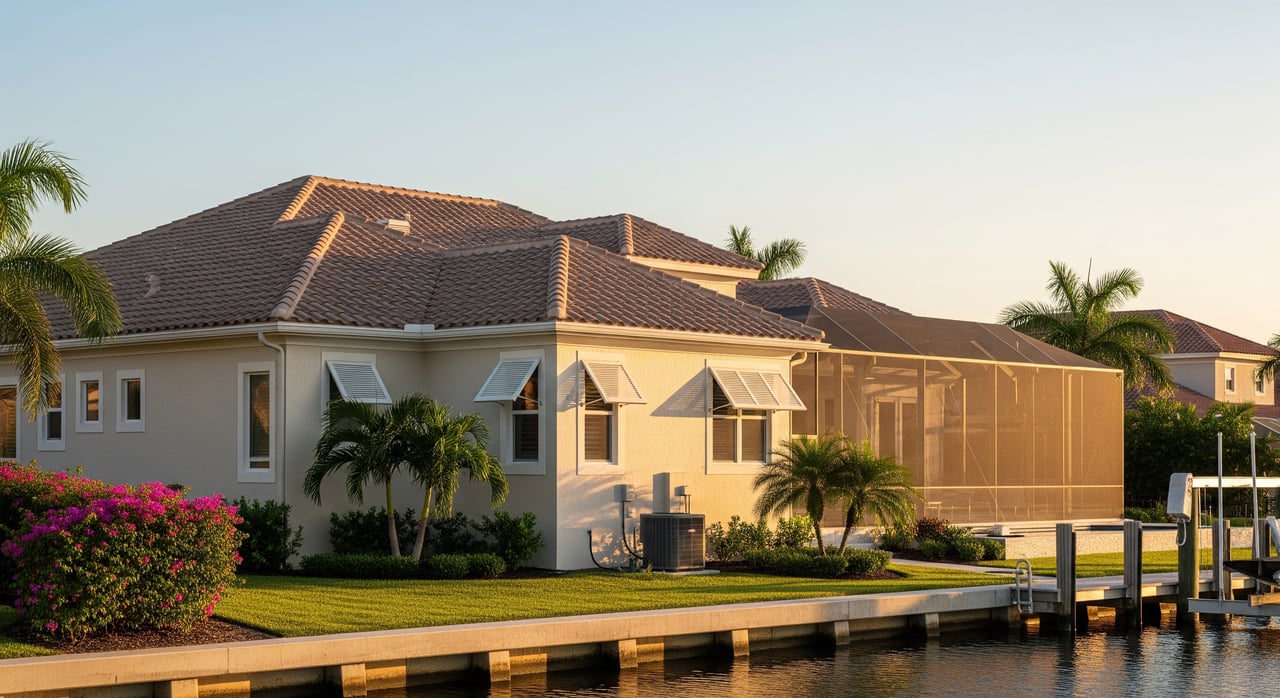
Explore Four-Point Inspection Financing in Port St. Lucie
October 16, 2025
October 16, 2025
Are rising insurance quotes putting your Port St. Lucie home plans on pause? You are not alone. In Florida, homeowners and flood insurance can change your monthly payment and your loan approval, and insurers may ask for a four‑point inspection before they will cover the home. In this guide, you will see how premiums influence your debt‑to‑income ratio (DTI), what a four‑point inspection includes, when it is requested, and the PSL‑specific steps that help you avoid last‑minute closing delays. Let’s dive in.
Lenders include your full monthly housing expense when they calculate DTI. That figure typically covers principal and interest, property taxes, homeowners insurance, flood insurance if required, and any HOA dues. Fannie Mae’s guidance confirms these costs are part of the monthly housing expense used in DTI calculations, often called PITI or PITIA. You can review this in the official Fannie Mae monthly housing expense guidance.
If the property is in a high‑risk flood zone and your lender requires coverage, flood insurance counts in the DTI, too. FEMA notes flood insurance is a separate policy with a typical 30‑day waiting period for new policies, with limited exceptions tied to a lender requirement at closing. Learn more from FEMA’s flood insurance overview.
Before closing, your lender will require proof of acceptable homeowners insurance. Without it, funding can be delayed or the lender may place its own policy, which is usually more expensive and offers limited protection. To reduce stress, secure an insurance binder or declarations page at least 1 to 2 weeks before closing, as described in this closing preparation guide.
In this scenario, the insurance line items alone add $280 each month. Because DTI thresholds are part of most loan programs, higher premiums can reduce your maximum loan amount or push you outside program limits.
A four‑point inspection is a focused, visual look at four systems: roof, electrical, plumbing, and HVAC. It is not a full home inspection. Insurers use it to evaluate risk, especially for older homes or when there are gaps in documentation. For a plain‑English overview, see the state’s MyFloridaCFO homeowner and inspection guide.
Insurers often request a four‑point on older homes or when changing carriers, but Florida does not require it by law. Requests can also surface during renewals. In today’s market, be ready for carrier‑specific rules that may differ by property age and condition.
Depending on findings, an insurer may require repairs, raise the premium, limit coverage, or decline to insure. See typical outcomes in this Florida four‑point explainer.
Four‑point inspections are usually fast, often 30 to 90 minutes. Costs commonly range from about $50 to $300, and many providers offer a bundle with a wind‑mitigation inspection. Wind mitigation uses a standardized state form and can help you qualify for insurance credits. For a helpful overview of windstorm inspections and the OIR‑B1‑1802 form, review this wind mitigation summary.
Wind‑mitigation inspections document features like roof covering, roof‑to‑wall attachments, and opening protection. Verified features can produce premium credits, and reports are typically valid for several years, depending on the insurer. Florida’s My Safe Florida Home program may offer a free wind‑mitigation inspection and matching grants for eligible homeowners, which can further reduce premiums. Check eligibility and timing on the My Safe Florida Home portal.
Port St. Lucie’s housing stock skews newer, with a median year built around 2001 in published summaries. Newer homes may be less likely to trigger a four‑point review strictly due to age, though many neighborhoods from the 1980s and 1990s are part of the mix. You can see the community’s reported median year built in this Port St. Lucie housing snapshot.
There is also some good local news. The City of Port St. Lucie reports strong Building Code Effectiveness Grading Schedule results, which insurers can use when setting premiums. That may translate into savings for some property owners. Read the city’s update on BCEGS and potential premium impacts.
Florida’s insurance market continues to evolve, with carriers adjusting pricing and underwriting. Stay current on program and rule changes through the state’s consumer page on property insurance changes.
If you want a clear plan tailored to your home or purchase in Port St. Lucie, reach out. As your local advisor, Liz Elliott can help you align insurance, inspections, and financing timelines so your closing stays on track.
Stay up to date on the latest real estate trends.



Get assistance in determining current property value, crafting a competitive offer, writing and negotiating a contract, and much more. Contact me today.