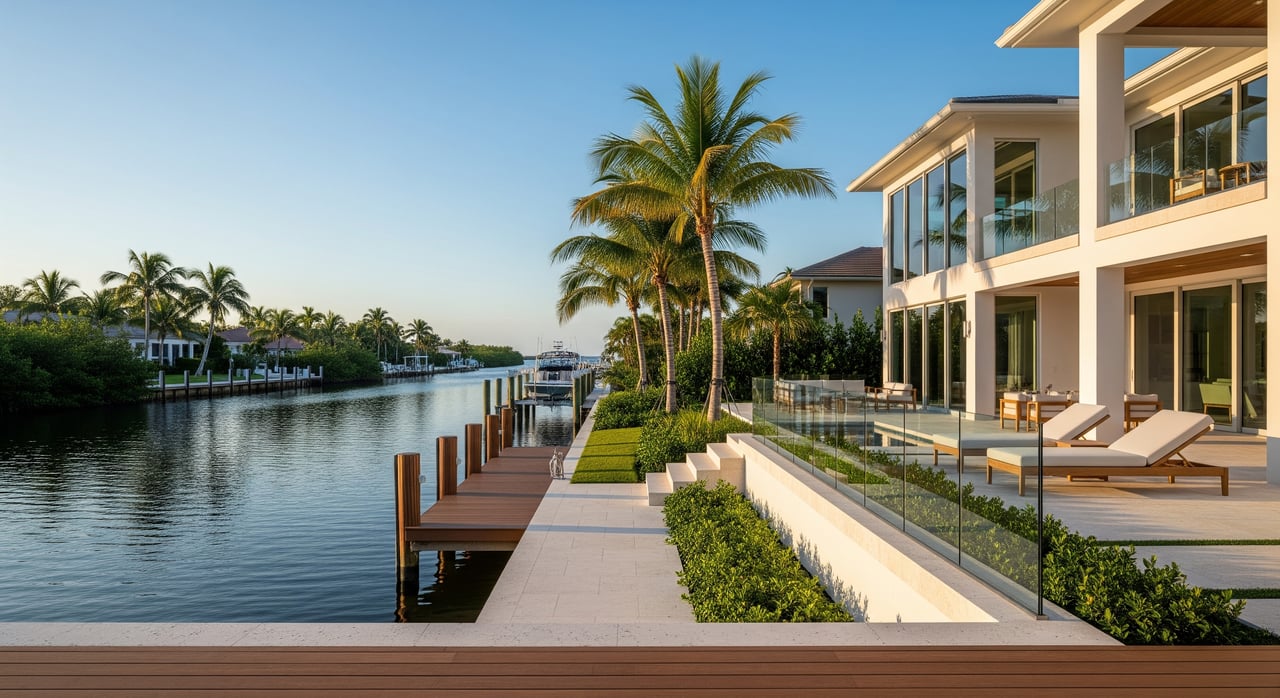
Intracoastal vs Ocean Access for Hobe Sound Homes
December 18, 2025
December 18, 2025
Shopping for a Hobe Sound waterfront home and torn between Intracoastal convenience and the thrill of direct ocean access? You are not alone. Your choice can shape daily boating, maintenance needs, and even insurance. In this guide, you will learn the real differences among Intracoastal, canal, river, and inlet access so you can match a property to your boat and lifestyle with confidence. Let’s dive in.
Homes on the Intracoastal Waterway sit along a federally recognized, marked navigable channel that runs behind the barrier islands. In South Florida, it gives you a sheltered route past Hobe Sound and through the broader West Palm and Treasure Coast corridor. Many waterfront neighborhoods and marinas are positioned on or off the ICW for easy day cruising.
The biggest benefit is protection from open-ocean swells. You typically get smoother water, a consistent marked channel, and regular traffic from other boaters. If you enjoy family cruising, day trips, or shorter rides to waterfront dining, ICW access is often a strong fit.
Riverfront and canal-front homes can offer private docks steps from your back door with calmer day-to-day conditions than open water. Tidal rivers and creeks feed into the ICW and area inlets, and some segments have deeper channels or stronger currents depending on location. Man-made canals range from single finger canals to cul-de-sacs and through-canals.
Canals are usually narrower and can be shallower than the main channel. That can limit maneuvering room and boat size, especially near the end of a canal. For many buyers, the tradeoff is worth it. You gain sheltered mooring and an easy launch for a center console, skiff, or smaller cruiser.
If offshore fishing or bluewater cruising is your priority, you may prefer homes with a clear route to a nearby inlet and no fixed-bridge restrictions. In and around Hobe Sound, inlet access is shaped by the nearest tidal inlets in the region, including Jupiter Inlet, St. Lucie Inlet, Lake Worth Inlet, and Fort Pierce Inlet.
Inlets are dynamic. Tides and currents can be strong, and channels can shoal and shift between dredging cycles. The reward is speed to deep water. If you run offshore frequently or own a larger sportfisher or sailing vessel, direct inlet routes can be a difference-maker.
The headline on a listing rarely tells the whole story. Your real-life boating experience depends on a few critical factors.
Public channels like the ICW are maintained to a controlling depth that can change with shoaling and dredging schedules. Side canals are not uniform, and many are shallower than the main channel. For any property, confirm the controlling depths along your route using current nautical charts and notices.
Buyer move: check NOAA charts and U.S. Army Corps of Engineers updates for the exact segment you will travel. If you plan to use a side canal, request a recent depth survey or sounding.
Bridge clearance is a make-or-break detail for sailboats, flybridge yachts, and many express cruisers. South Florida bridges vary in height. Some allow mast-up transit, while others restrict tall vessels.
Buyer move: use Florida Department of Transportation bridge data and local signage to confirm the vertical clearance for every fixed bridge between your dock and the inlet. Compare each to your boat’s air draft and factor in tide height.
Southeast Florida’s tidal range is modest, but inlet currents can be strong and conditions can change quickly with wind and tide. Shoaling near inlets is common and channels are dredged periodically.
Buyer move: review Local Notice to Mariners, NOAA tide and current tables, and recent dredging notices for your intended inlet. If you plan frequent offshore runs, this research will inform safety and timing.
“Ocean access” is not just a map line. Your time to deep water depends on distance to the inlet, bridge openings, speed zones, and your typical cruising speed. In some spots you can reach an inlet in under 10 minutes. Others may take much longer.
Buyer move: trace the actual route from the property to the inlet and estimate time at a realistic speed. Note any bridges and their opening schedules.
If dock size or depth is limited at a property, a marina can fill the gap with wet slips, dry stack, fuel, haul-out, and repairs. Marina capacities and waitlists vary by season and location.
Buyer move: call nearby marinas to confirm maximum vessel length, services, transient policies, and availability. If a marina slip is your plan B, verify it before you commit to a home.
Waterfront living includes unique rules and recurring costs. Understanding them early prevents surprises.
Docks, boat lifts, and shoreline work usually require permits. State and local agencies regulate setbacks, piling standards, and protection of seagrass and shorelines. Some projects can also involve federal approvals.
Buyer move: verify that the existing dock and seawall were permitted and are compliant. If you plan changes, consult local permitting staff and the Florida Department of Environmental Protection before closing.
Many waterfront properties fall within FEMA flood zones. Ocean-facing or inlet-proximate homes may face higher windstorm and flood premiums. Boat insurance also reflects exposure to surge and open-water conditions.
Buyer move: check FEMA flood maps for the exact zone and talk with a local insurance agent about premiums tied to the property’s elevation and your docked vessel.
Communities can regulate dock appearance, boat size, live-aboard use, and slip leasing. Municipalities may have ordinances that limit certain boat types or structures.
Buyer move: review HOA covenants and local ordinances to confirm your boat and planned use are allowed.
Seawalls, docks, and pilings require ongoing maintenance. Some areas have improvement districts that assess dredging fees. Seawalls can need major repairs over time, especially if older or unpermitted.
Buyer move: order a waterfront inspection focused on seawall condition, pilings, and dock capacity for your vessel’s length, beam, and draft.
Choosing between Intracoastal, canal, river, and inlet routes comes down to how you use your boat.
Key takeaway: the best access is the one that fits how you actually boat most days, not just a label on the listing.
Use this simple list to compare properties apples to apples.
Waterfront due diligence is specialized, but it does not have to be stressful. With a clear plan and the right local guidance, you can choose a Hobe Sound home that fits your boat, your routine, and your long-term goals. If you want a tailored short list and hands-on help verifying bridges, depths, permits, and insurance implications, connect with a local advisor who does this every day.
For a personalized plan and private tours tailored to how you boat, schedule a conversation with Liz Elliott. You will get a curated set of properties, step-by-step verifications, and a smooth path from offer to on-water living.
Stay up to date on the latest real estate trends.
Get assistance in determining current property value, crafting a competitive offer, writing and negotiating a contract, and much more. Contact me today.